 July 15, 2026 01:58
Forklift Training Singapore – Build a Safer, Smarter Workforce
Every year, workplace accidents involving forklifts and other material handling equipment cost Singaporean businesses millions in medical expenses, legal fees, and lost productivity. Yet many of these incidents are entirely preventable. The common thread linking most forklift-related accidents is inadequate operator training. When drivers are not properly instructed in safe operating procedures, they become liabilities rather than assets to their organisations.
UMW offers comprehensive training courses approved by the Ministry of Manpower and SkillsFuture Singapore for powered industrial trucks. These programmes are designed to address the specific challenges faced by operators in Singapore's demanding industrial environment. By investing in professional instruction, businesses can significantly reduce accident rates, extend equipment life, and improve operational efficiency. This article examines the benefits of accredited operator education and why it should be a priority for every company that uses forklifts.
Key Takeaways:
-
Accredited operator education reduces workplace accidents and associated liabilities.
-
Preventive maintenance knowledge extends equipment lifespan and lowers repair costs.
-
MOM-approved certification ensures full legal compliance for your operations.
-
Skilled operators improve throughput and minimise product damage.
-
UMW's programmes are regularly updated to reflect current industry standards.
Building a Competent and Confident Workforce
The foundation of any safe and efficient warehouse operation is the competence of its equipment operators. A driver who has received proper instruction understands the capabilities and limitations of their machine. They know how to assess load weights, maintain stability during turns, and navigate through congested areas without endangering themselves or others. Without this knowledge, even the most sophisticated forklift becomes a potential hazard.
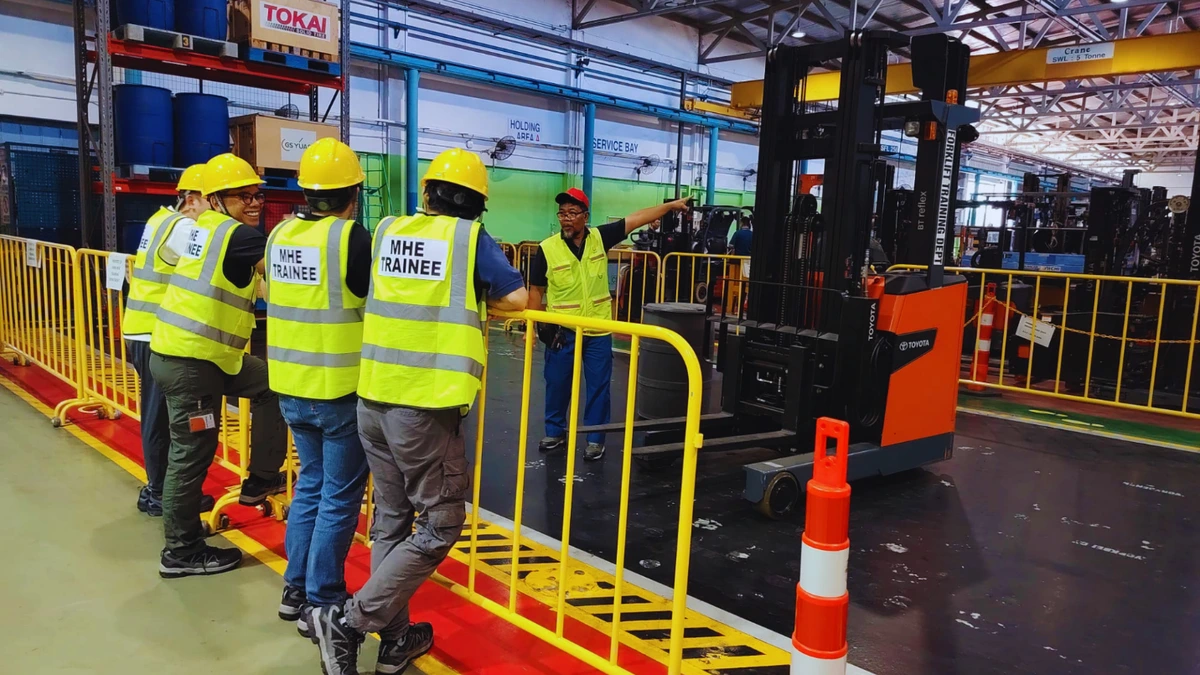
UMW's training courses are structured to build both competence and confidence in every participant. The curriculum covers essential topics such as pre-operation inspections, load handling techniques, and safe manoeuvring in tight spaces. Trainees practise these skills under the guidance of experienced instructors, receiving immediate feedback on their performance. The practical sessions are particularly valuable, as they allow operators to develop muscle memory and instinctive reactions to common warehouse scenarios. Whether operating a counterbalance truck, a reach truck, or a powered pallet truck, graduates of these programmes demonstrate consistently higher skill levels and greater situational awareness than their untrained counterparts.
Extending Equipment Life Through Operator Education
One of the most significant yet overlooked benefits of professional training is its impact on equipment longevity. Operators who have been properly instructed treat their machines with respect. They avoid harsh braking, sudden acceleration, and overloading – all of which accelerate component wear. They also perform daily inspections that catch minor issues before they become major failures.
UMW's programmes place particular emphasis on preventive maintenance practices. Trainees learn to check fluid levels, inspect tyres for damage, and identify warning signs such as unusual noises or vibrations. They also receive guidance on proper battery care for electric models and basic troubleshooting techniques. When these practices are consistently applied, the interval between major servicing extends significantly. For a typical fleet of forklifts and powered pallet trucks, this translates into substantial savings on spare parts, labour, and downtime. Moreover, a well-maintained fleet retains higher resale value, should the business decide to upgrade or replace older units.
Creating a Safety-First Culture in the Workplace
Safety is not just a regulatory requirement; it is a fundamental responsibility of every employer. Singapore's Ministry of Manpower has established clear guidelines for forklift operation, and non-compliance can result in severe penalties. However, the true cost of inadequate training goes far beyond fines. Workplace accidents cause human suffering, damage company reputation, and create a climate of fear that undermines morale.
UMW's training courses are designed to foster a safety-first mindset in every participant. The curriculum covers hazard identification, risk assessment, and emergency response procedures. Operators learn how to assess their working environment for potential dangers, such as uneven surfaces, blind corners, or overhead obstructions. They also practise defensive driving techniques that help them anticipate and avoid dangerous situations. The training includes specific guidance on operating different types of equipment, including reach trucks, counterbalance forklifts, and powered pallet trucks, each with its own handling characteristics. By promoting a culture of safety consciousness, organisations can dramatically reduce their accident rates and create a more positive work environment.
Why UMW Is the Preferred Training Partner
Choosing the right training provider is a critical decision that affects the quality of instruction and the long-term competence of your workforce. UMW brings decades of industry experience to its courses, with trainers who possess deep practical knowledge of material handling equipment and warehouse operations. These instructors do not simply deliver theoretical content; they share real-world insights gained from years of working in the field.
UMW's commitment to quality extends to its continuous curriculum improvement process. All courses are regularly updated to incorporate the latest regulatory changes from MOM and SSG, as well as emerging best practices in the industry. This ensures that participants receive training that remains relevant and effective. The courses cater to a wide range of skill levels, from complete beginners to experienced operators seeking refresher or upgrade training. UMW also provides training on specific equipment types, including powered pallet trucks, ensuring that operators are competent with the machines they will actually use. By partnering with UMW, businesses gain access to a comprehensive training ecosystem that supports their operational goals and compliance requirements.
The Business Case for Professional Training
Investing in operator education is not an expense; it is a strategic investment with measurable returns. The immediate benefits of reduced accidents and lower maintenance costs are obvious, but the long-term advantages are equally compelling. A well-trained workforce is more adaptable, able to handle new equipment and changing operational requirements with minimal disruption. This flexibility is invaluable in Singapore's dynamic business environment.
Furthermore, accredited training enhances your company's reputation as a responsible employer. Customers and partners are increasingly attentive to safety standards and ethical practices. When you can demonstrate that your operators are properly certified, you build trust and differentiate yourself from competitors who may cut corners. The cost of training is modest compared to the potential costs of accidents, downtime, and regulatory penalties. By ensuring that every operator, whether on a reach truck or a powered pallet truck, is fully trained, you protect your people, your assets, and your reputation. UMW's programmes offer a structured, effective pathway to achieving these outcomes.
Frequently Asked Questions
-
How long does a typical forklift training course take to complete?
Most MOM-approved courses run for three to five days, covering both theoretical knowledge and practical assessments. Refresher courses for experienced operators are shorter, typically lasting one to two days. -
Is the certification recognised across different industries in Singapore?
Yes, as long as the training provider is accredited by MOM and SSG, the certification is valid across all sectors, including logistics, construction, manufacturing, and warehousing. -
Do I need to provide my own forklift for the practical training sessions?
No. UMW supplies fully maintained equipment, including counterbalance forklifts, reach trucks, and powered pallet trucks, for all practical training. You are welcome to use your own machines if preferred. -
How often should operators renew their forklift certification?
MOM does not specify a mandatory expiry date, but industry best practice recommends refresher training every three years or whenever an operator is assigned to new equipment or a different warehouse layout. -
Can training help reduce damage to storage racking and other infrastructure?
Absolutely. Accredited courses teach operators precise control, spatial awareness, and safe approach techniques, significantly reducing the frequency of collisions and racking strikes.
Read another Article: Forklifts or Racking – Making the Right Warehouse Choice
Posted July 15, 2026 01:58
 Singapore
 Reply
Reply
June 23, 2026 07:59
New Forklifts or New Racking – Which Comes First?
When warehouse performance begins to falter, the natural reaction is to look for a quick fix. For many facility managers in Singapore, this means either ordering a batch of new forklifts or expanding their storage racking capacity. Both seem like logical solutions, but choosing the wrong one can waste significant capital without resolving the underlying problem. The truth is that equipment and infrastructure are deeply interconnected, and upgrading one without considering the other often creates new inefficiencies.
This article takes a practical look at how to diagnose the real source of your warehouse bottlenecks. Rather than guessing whether you need new trucks or new racks, we will examine the operational, financial, and compliance factors that should guide your decision. By the end, you will have a clear framework for making an informed investment that delivers genuine improvements in throughput, safety, and cost control.
Key Takeaways:
-
Conduct a detailed workflow analysis before committing to any major capital expenditure.
-
High-density racking systems require compatible trucks; mismatches reduce efficiency.
-
Operator training is essential when introducing new equipment or storage configurations.
-
Floor maintenance, including regular cleaning, protects both trucks and racking.
-
Used equipment can offer value, but it must be thoroughly inspected for compliance.
Diagnosing the Real Bottleneck
Many warehouse managers assume that slow operations are caused by outdated forklifts. While ageing equipment can certainly be a factor, it is equally common for bottlenecks to originate from poor storage layout or insufficient racking capacity. A truck that travels excessive distances to find an empty pallet position is wasting time, regardless of how new or fast it is. Similarly, a modern electric forklift cannot compensate for aisles that are too narrow for its turning circle.
To diagnose accurately, start by observing your operation during peak hours. Note where queues form, where trucks wait, and where goods accumulate. If trucks are frequently idle while waiting for racking positions to become available, your storage capacity is likely the constraint. Conversely, if trucks are constantly moving but struggling to keep up with demand, your fleet may be underpowered or under-maintained. This forensic approach, rather than guesswork, will reveal whether your investment should go towards new forklifts, additional racking, or a combination of both.
The Hidden Costs of Mismatched Equipment
One of the most common mistakes in warehouse planning is treating forklifts and racking as separate purchases. When a new racking system is installed without considering the trucks that will use it, the results can be costly. A reach truck that is too wide for the aisles will struggle to manoeuvre, increasing cycle times and raising the risk of collisions. Conversely, a racking system that is too low for your forklift's lift capacity wastes vertical space and reduces storage density.
The financial impact of mismatched equipment extends beyond lost productivity. Racking strikes caused by oversized trucks can damage structural beams, requiring expensive repairs and creating safety hazards. Similarly, forklifts that are overworked due to inefficient layouts experience faster wear on tyres, masts, and hydraulic systems. This is why leading suppliers in Singapore emphasise the importance of integrated solutions, where turning circles, mast heights, and aisle widths are calculated together. A powered pallet truck, for example, is ideal for horizontal transfers but cannot replace a reach truck for high-level stacking. Understanding these distinctions is essential for making the right investment.
Regulatory Compliance and Operator Competence
Singapore's Ministry of Manpower enforces strict regulations for forklift operations, and these requirements become more complex when you introduce new equipment or change your racking layout. Any modification that affects how trucks are used, such as narrower aisles or higher stacking heights, may trigger additional training obligations. Operators must demonstrate competence in the specific conditions of your warehouse, not just hold a general licence.

Accredited training providers offer courses that address these specific needs. Operators learn how to handle loads safely in confined spaces, perform pre-use inspections, and understand the stability limits of their trucks. When you invest in new racking, ensuring your team receives appropriate instruction is not just a compliance requirement; it is a practical necessity. A well-trained operator can move goods more efficiently, reduce damage to equipment and infrastructure, and contribute to a safer workplace. This training is equally important when introducing a powered pallet truck to your fleet, as its handling characteristics differ from those of larger forklifts.
Making the Case for New Racking
If your warehouse is overcrowded but your aisles are wide, new racking is likely the better investment. High-density systems such as double-deep racking, drive-in racking, or push-back systems can dramatically increase your storage capacity without expanding your building footprint. These solutions are particularly valuable in Singapore, where land is scarce, and rental costs are high. However, they require careful planning to ensure that your existing trucks can operate effectively within the new configuration.
When considering new racking, evaluate the full range of equipment that will support it. High-density systems often require specialised trucks with extended reach capabilities or reduced chassis widths. You may also need additional horizontal transport equipment, such as powered pallet trucks, to move goods efficiently between the racking and the loading bay. Additionally, floor condition becomes more critical in high-density layouts. Regular cleaning with scrubbing machines helps maintain a safe surface, reducing wear on truck wheels and preventing damage to racking anchors. A comprehensive approach that considers all these factors will maximise the return on your investment.
Making the Case for New Forklifts
If your storage layout is adequate but your throughput is suffering, the problem may lie with your fleet. Aged forklifts are prone to breakdowns, and obsolete models can be difficult to maintain due to the limited availability of spare parts. Upgrading to modern electric forklifts offers several advantages, including faster travel speeds, lower maintenance requirements, and zero emissions. For indoor warehouses, the elimination of exhaust fumes creates a healthier environment for workers.
Beyond the primary forklifts, consider your ancillary equipment. If workers are manually moving pallets across the warehouse, they are wasting time and risking injury. A powered pallet truck allows a single employee to transport heavy loads quickly and safely, freeing up larger trucks for stacking tasks. Modern models feature lithium-ion batteries that support opportunity charging, enabling continuous operation during busy shifts. When evaluating new forklifts, factor in the total cost of ownership, including energy consumption, maintenance intervals, and the availability of after-sales support. A powered pallet truck, while smaller and less expensive than a reach truck, can deliver significant productivity gains when used appropriately.
The Importance of Floor Maintenance
One aspect of warehouse operations that is frequently overlooked is the condition of the floor. High-density racking systems place significant loads on concrete surfaces, and uneven or damaged floors can compromise the stability of the entire structure. Similarly, electric pallet trucks and powered pallet trucks require smooth surfaces to operate efficiently; debris or cracks can damage wheels and cause load instability.
Regular maintenance of the warehouse floor is essential for protecting your investment in both racking and forklifts. Scrubbing machines remove dust, oil, and other contaminants that accumulate during daily operations. A clean floor allows trucks to travel at optimal speeds, reduces tyre wear, and prevents build-up that could corrode racking anchors. While this may seem like a minor detail, it contributes significantly to the longevity of your equipment and the safety of your workforce. When planning any upgrade, whether to racking or forklifts, include floor maintenance in your budget and schedule.
New vs Used Equipment – A Financial Perspective
Budget constraints often lead warehouse managers to consider used equipment as an alternative to new purchases. The market for pre-owned forklifts and racking is active in Singapore, and a well-maintained used reach truck can offer excellent value. However, caution is essential. Used equipment must be thoroughly inspected to ensure it meets current safety standards and is compatible with your operational requirements.
When evaluating a used reach truck for sale in Singapore, request a complete service history and verify that it has passed its annual Thorough Examination. For racking, second-hand steel must be checked for weld integrity and structural soundness; damaged components can pose serious safety risks. Also consider the availability of spare parts for older models, as delays in repairs can negate any initial cost savings. A powered pallet truck from a reputable brand, even if used, can be a reliable addition to your fleet if it comes with a documented maintenance record. Weigh the upfront savings against the potential for higher maintenance costs and shorter remaining lifespan.
5 Frequently Asked Questions
-
How can I tell if my warehouse needs new forklifts or new racking?
Conduct a workflow audit to identify where delays occur. If trucks are waiting for storage space, the racking is insufficient. If trucks are slow or unreliable, the fleet needs upgrading. -
Are there regulations governing forklift operations in Singapore?
Yes, all forklifts must undergo annual Thorough Examinations, and operators must hold MOM-recognised certifications. Changes to racking or equipment may require additional training. -
Can used equipment be a good investment?
Yes, provided it is inspected thoroughly and meets current safety standards. Verify maintenance history and ensure spare parts are available. -
How does floor condition affect warehouse operations?
Poor floor condition damages truck wheels, destabilises racking, and increases the risk of accidents. Regular cleaning with scrubbing machines is essential. -
What is the most common mistake when upgrading a warehouse?
Upgrading forklifts or racking in isolation without considering their interdependency. Always evaluate both together.
Read another Article: Mastering Warehouse Fleet Safety and Storage Racking
Posted June 23, 2026 07:59
 RSS Feed
Recent Blog Entries
- Forklift Training Singapore – Build a Safer, Smarter Workforce
- New Forklifts or New Racking – Which Comes First?
Tags
Archive
- August 2026
- July 2026
- June 2026
- May 2026
- April 2026
- March 2026
- February 2026
- August 2025
- July 2025
- June 2025
- May 2025
- April 2025
- March 2025
- February 2025
- January 2025
- December 2024
- November 2024
- October 2024
- September 2024
- August 2024
- July 2024
- June 2024
- May 2024
- April 2024
- March 2024
- February 2024
- January 2024
- December 2023
- November 2023
- October 2023
- September 2023
- August 2023
- July 2023
- June 2023
- May 2023
- April 2023
- March 2023
- February 2023
- January 2023
- December 2022
- November 2022
- October 2022
- September 2022
- August 2022
- July 2022
- June 2022
- May 2022
- April 2022
- March 2022
- February 2022
- January 2022
- December 2021
- November 2021
- October 2021
- September 2021